What Are Fascia Boards and Why Do They Matter?
Quick Answer and Article Summary:
Fascia boards are the horizontal boards that run along your roofline and serve as the structural mounting surface for your gutters. They matter because even the best gutter system will fail early if the fascia behind it is damaged, rotted, or improperly prepared. In short, gutters don’t fail on their own—most failures start with the fascia board they’re attached to. This is one of the most overlooked issues in the gutter industry. Many installers focus only on the visible components—gutters, hangers, and downspouts—while ignoring the condition of the fascia entirely. At Global Gutter Systems, fascia boards are treated as a critical part of the system, not an optional add-on. Addressing fascia correctly is often the difference between a gutter system that lasts 10 years and one that lasts 25+.
What Exactly Is a Fascia Board?
The fascia board is the long, straight board attached to the ends of your roof rafters. It closes off the roof edge, supports the lower edge of the roof, and—most importantly—holds your gutters in place.
From a functional standpoint, the fascia board must:
- Support the full weight of water-filled gutters
- Hold fasteners securely without flexing or pulling out
- Maintain proper gutter pitch over time
- Prevent water from entering the roof structure
When fascia boards are solid and properly protected, gutters perform as designed. When they’re compromised, problems begin almost immediately.
Why Fascia Boards Are the Weak Link in Most Gutter Systems
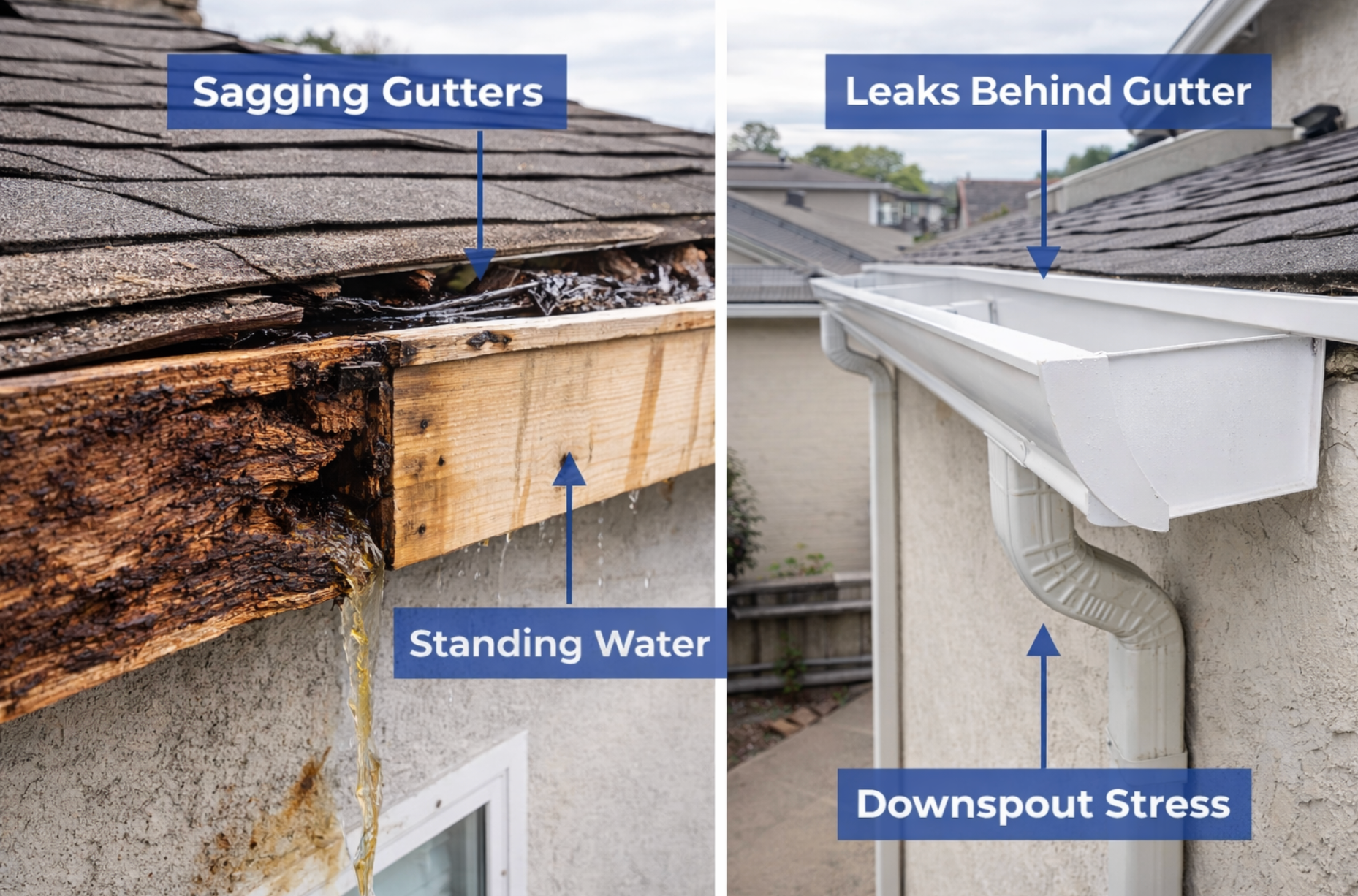
Fascia boards fail slowly and quietly. Unlike a dented gutter or a disconnected downspout, fascia damage is usually hidden behind the gutter itself. Homeowners often don’t realize there’s an issue until gutters start sagging, leaking behind the back edge, or pulling away from the house. The most common causes of fascia damage include:
- Overflowing gutters during heavy rain
- Short or undersized downspouts
- Poor gutter pitch that allows standing water
- Old spike-and-ferrule fasteners that loosen over time
- Roof leaks are dripping behind the gutter
Once water gets behind the gutter, it sits directly against the fascia board. Over time, wood fascia absorbs moisture, softens, and begins to rot. At that point, even new gutters can’t stay securely attached.
How Fascia Condition Directly Affects Gutter Longevity
Fascia boards don’t just support gutters—they determine how long those gutters will last.
Structural Integrity
Gutters rely on fascia to anchor hidden hangers and fasteners. If the fascia is soft or deteriorated, fasteners loosen, causing gutters to sag or separate from the roofline.
Proper Pitch and Drainage
Even a slight shift in fascia alignment can flatten gutter pitch. When pitch is lost, water pools instead of flowing, accelerating corrosion, leaks, and overflow.
Leak Prevention
Water that sneaks behind the gutter doesn’t just damage fascia—it often travels upward into roof decking or downward into wall cavities. These are the leaks that are hardest to trace and most expensive to repair.
Downspout Stress
When gutters sag due to weak fascia, downspouts absorb stress they weren’t designed to handle. This leads to joint separation, cracking, or water dumping near the foundation.
Why Many Gutter Companies Ignore Fascia Boards
The reality is simple: fascia work complicates gutter jobs. Repairing or wrapping fascia requires carpentry skills, additional materials, and more time on site. Many installers prefer to avoid the conversation altogether, especially if fascia damage isn’t visible from the ground.
Common shortcuts include:
- Reinstalling gutters over rotted fascia
- Using longer screws to “bite into something solid.”
- Adding extra hangers instead of fixing the mounting surface
- Skipping inspection entirely
These shortcuts don’t solve the problem—they delay it. The homeowner ends up paying twice: once for the gutter install, and again when the system fails prematurely.
The Relationship Between Fascia Boards and Downspouts
One of the biggest contributors to fascia damage is poor downspout design.
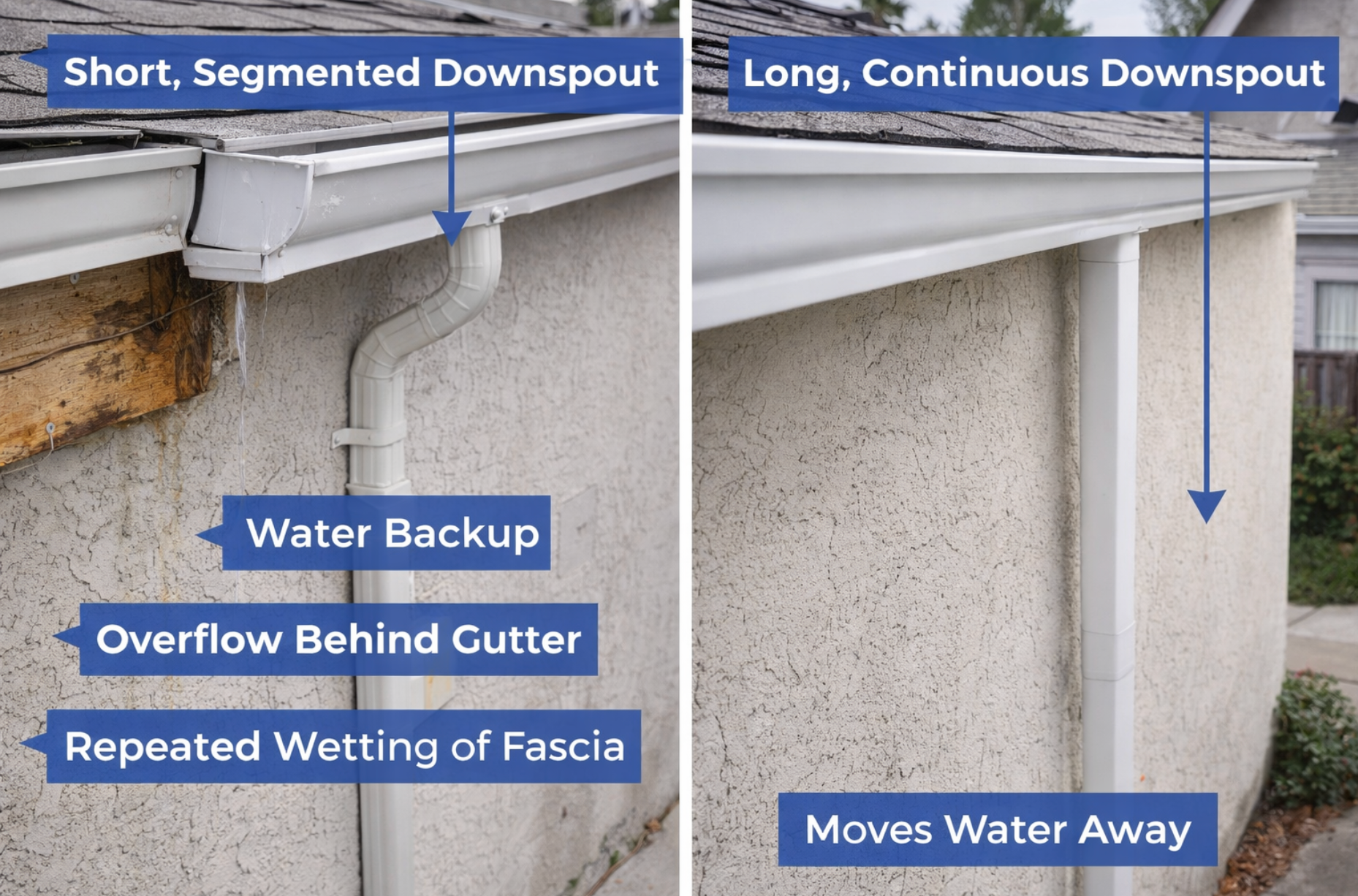
At Global Gutter Systems, we install some of the longest continuous downspouts in the Bay Area, specifically to reduce water backup and pressure on the gutter system. Fewer seams and joints mean fewer failure points and more efficient water movement away from the roofline.
Short, segmented downspouts increase the likelihood of:
- Water is backing up during heavy rain
- Overflow behind the gutter
- Repeated wetting of the fascia board
Longer, properly routed downspouts protect fascia boards by keeping water moving—away from the house, not sitting against it.
Fascia Boards and Tile Roofs: A Bay Area Reality
Many homes in Alameda and Contra Costa Counties feature tile roofs, which introduce additional fascia challenges. Tile roofs shed water aggressively, and improper gutter placement can send runoff directly behind the gutter.
Without careful fascia inspection and correct gutter spacing, tile-roof homes are especially prone to:
- Hidden fascia rot
- Water intrusion behind flashing
- Premature gutter failure
Global Gutter Systems specializes in tile-roof gutter installations, taking into account roof profile, runoff patterns, and fascia exposure to ensure long-term performance.
Why DIY Fascia Board Repair is a Mistake
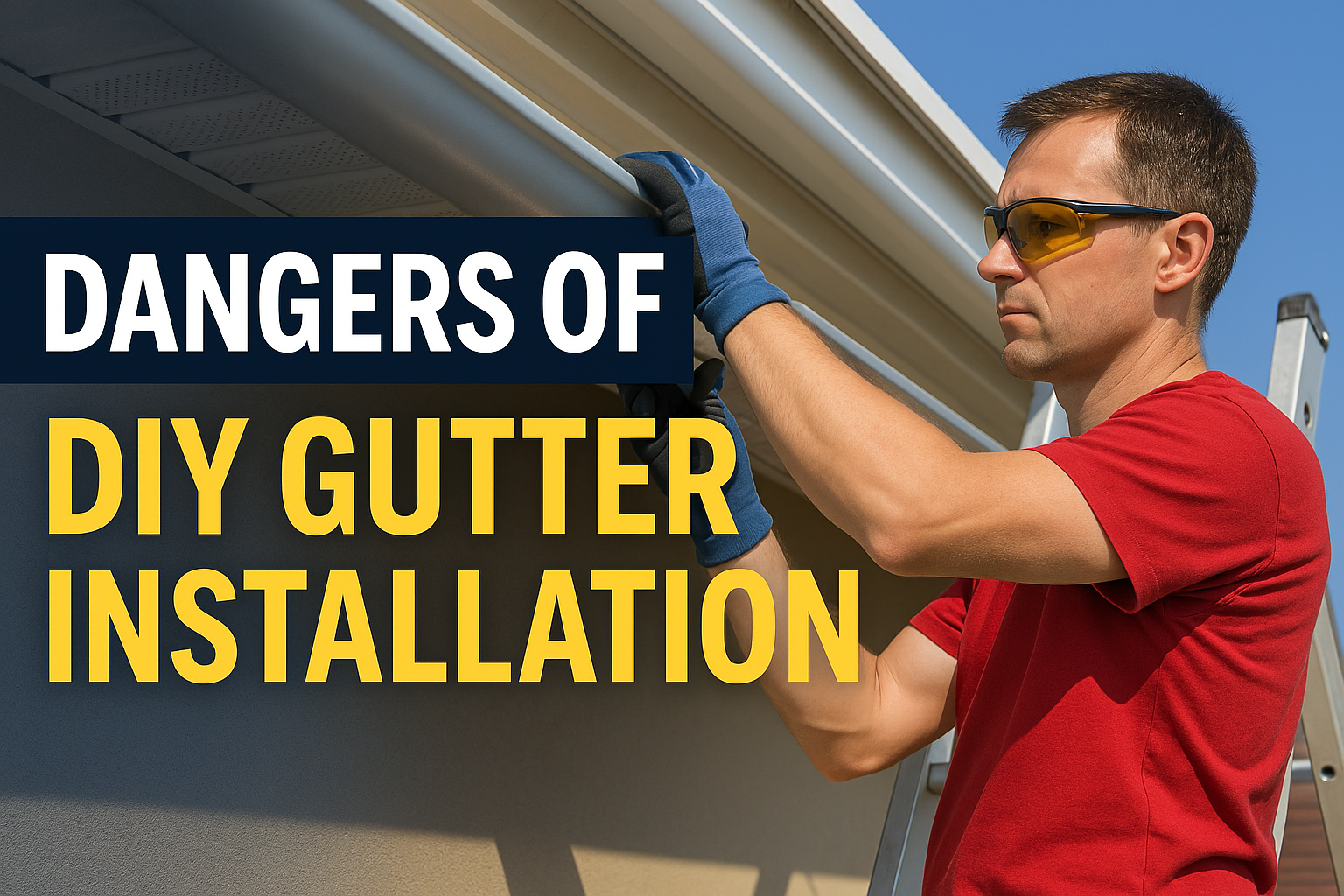
DIY gutter installs usually focus on what homeowners can see—gutters, elbows, and downspouts—while the fascia boards behind them are often overlooked until problems appear. When new gutters are installed onto compromised fascia, the results show up quickly: sagging sections, hidden leaks behind the gutter, voided manufacturer warranties, and long-term structural water damage.
What initially feels like a cost-saving project often becomes more expensive to repair once underlying fascia issues surface.
Professional gutter systems take a different approach. Instead of simply hanging gutters, experienced installers design a complete water management system from the roofline down. That starts with inspecting fascia boards before installation, addressing hidden rot or structural weaknesses, ensuring proper gutter pitch from day one, and designing downspout layouts that reduce water exposure along the fascia.
This systems-based approach prevents future problems rather than masking visible ones—and it’s a major reason professionally installed gutter systems last longer, perform better, and protect the home more effectively.
Final Thoughts: Why Fascia Boards Truly Matter
Fascia boards are not optional, secondary, or cosmetic. They are the foundation of your entire gutter system. Ignoring fascia condition is one of the fastest ways to shorten gutter lifespan, invite leaks, and create expensive structural repairs. Addressing fascia properly—once—can add years or even decades to your gutter system.
At Global Gutter Systems, fascia evaluation and correction are part of doing the job right. If you’re investing in new gutters, gutter screens, or a full replacement, make sure the company you hire is willing to look behind the gutters—not just hang new ones.
That’s where true longevity begins.
Get a Free Quote Today!
Contact Us
Follow us online for updates